
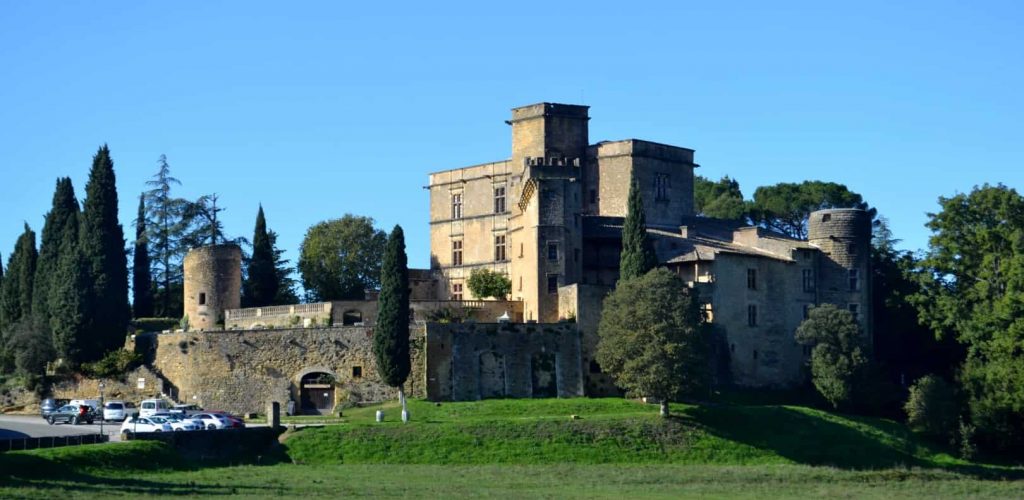
“Yes, one evening in Provence, one perfect hill, one whiff of salt are enough to show us that everything still lies before us. We need to reinvent fire once more, to settle down once again to the job of appeasing the body’s hunger.”
Albert Camus
My favorite writer/philosopher Albert Camus lived in Lourmarin and is buried there. This article is not a treatise on his writings because absurdism and existentialism is a bit on the heavy side, and I am in the business of tourism after all. But for those who are up for it, we can always meet in Lourmarin and discuss Albert Camus and the absurd in one of the picturesque cafes lining the streets. I think he said it best about Provence, capturing its essence, like some of the famous painters from the region. Only he did it with words. And in Provence “all still lies before us…we…reinvent fire…appeasing the body’s hunger”.
Saturday morning, a beautiful day
I am a bit spoiled by now, by many villages, and I look for the uniqueness in each place. And here in Lourmarin I decide to invest my time exploring the Lourmarin Chateau. Another chateau you say? Each one is different, I tell you, and if it’s not, I will tell you.
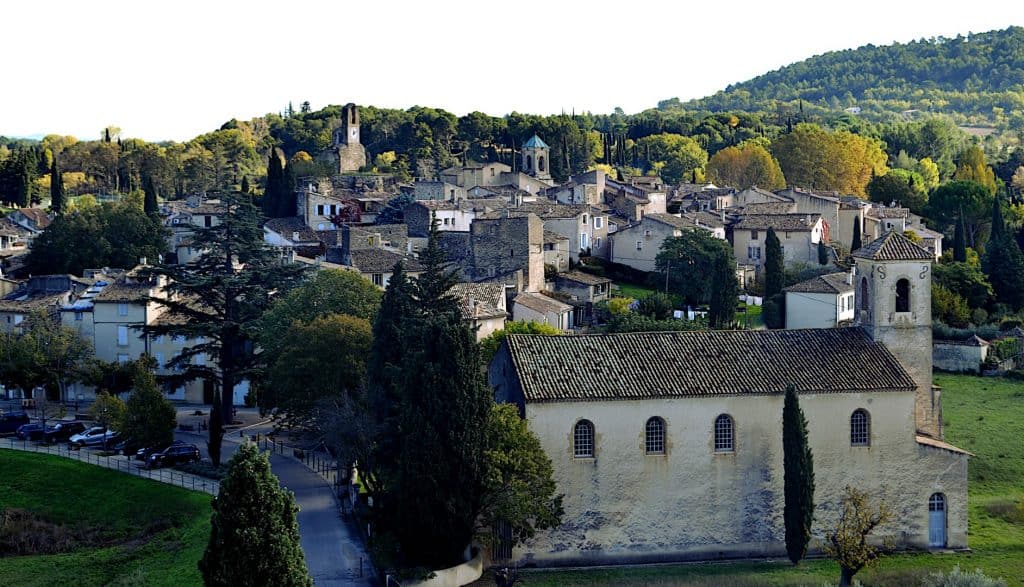
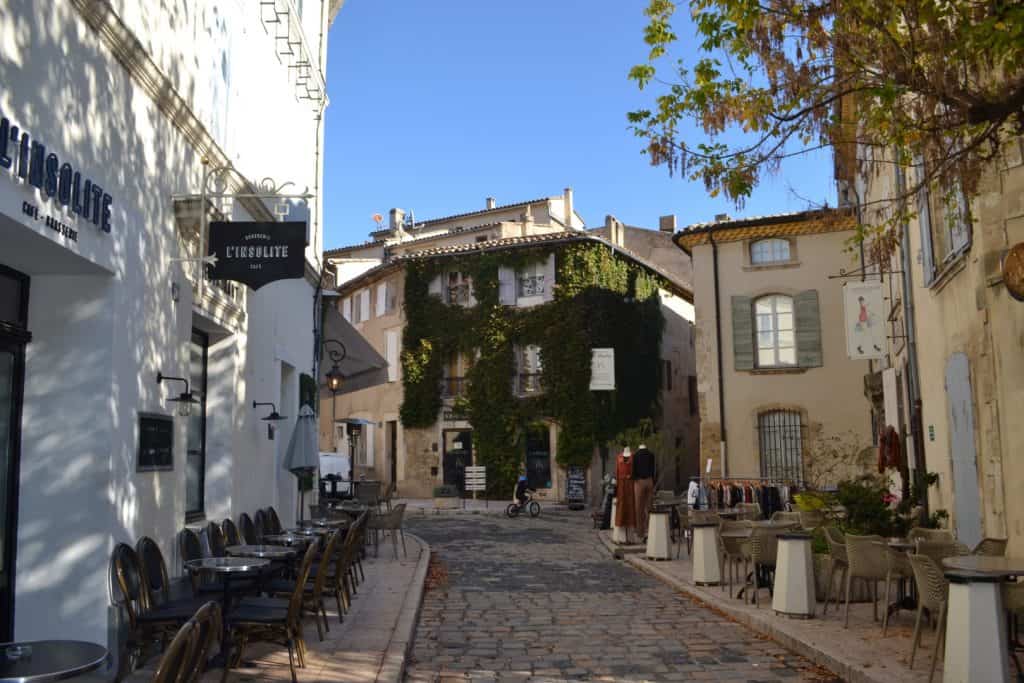
I arrived to Lourmarin with great expectations, knowing that this is a very popular tourist destination on the ‘village trail’. Shudder the thought of being a tourist, yet I recognise the value. I’m not disappointed in my expectations and on a crisp and sunny Saturday in November, Lourmarin welcomes me with a respectable number of bourgeois or upper-middle class French visitors. Well dressed, in quiet introspection, reserved and polite, they walk the clean and perfect streets of Lourmarin, gazing at shops, door fronts, and eventually settling on a cafe with a sunny exposition. Yes, this is what I expected. It is to be expected.
Lourmarin Chateau: some history…
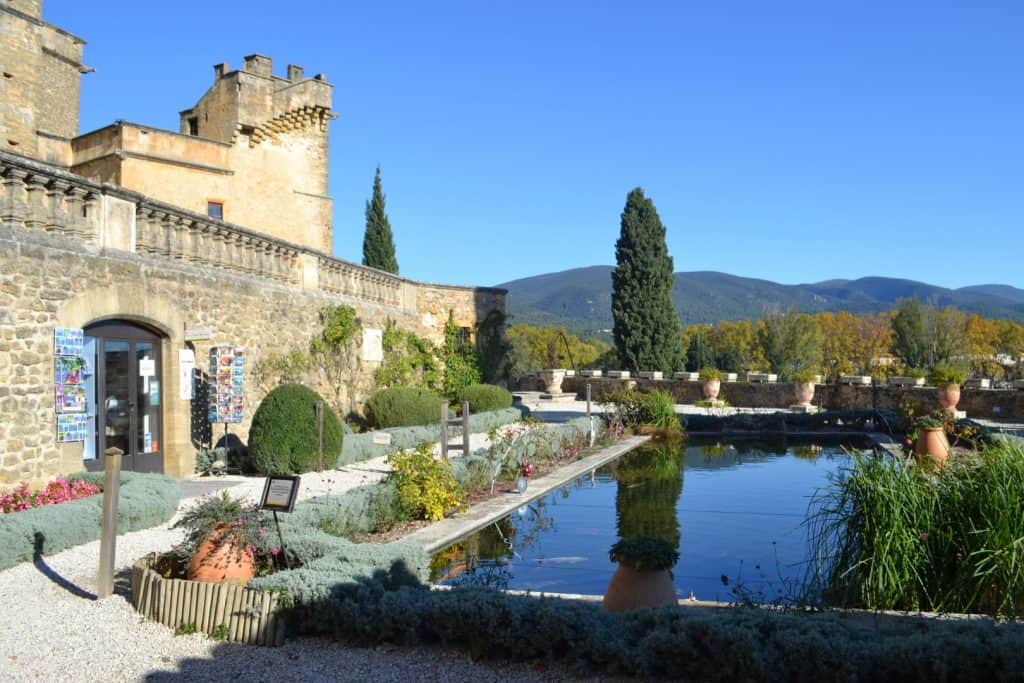
I enter the complex, in the courtyard a lovely rectangular pool with colored fish greet me. It is flanked by flowers and manicured bushes. The ticket vendor greets me with a smile, for I am one of the first visitors. I have no idea what to expect, preferring to come tabula rasa, and to discover the site slowly, peeling each layer off. The vendor shoves in my hands some handouts so I can inform myself, by myself, in quiet, as there are no audio guides here. Sometimes that’s better, you end up paying more attention to technological gadgets and miss the point.
Lourmarin Chateau 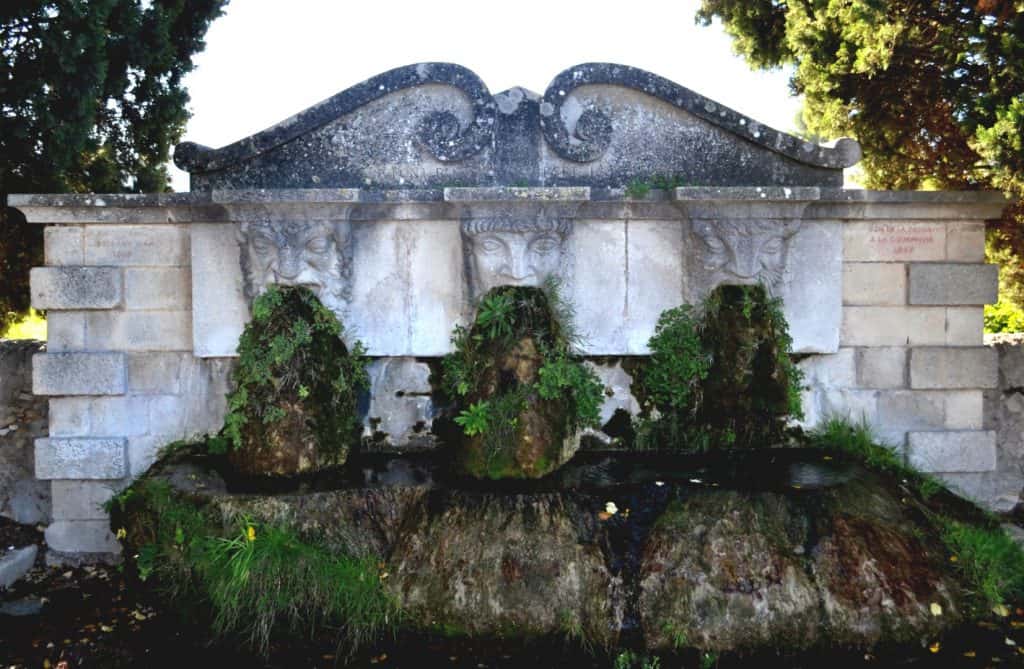
Originally a 12th-century fortress, the chateau was transformed in the 15th century by Foulques d’Agoult, chamberlain of King Rene I of Anjou. After 1526 the castle belonged to Louis d’Agoult-Montauban and his wife and the new annex made the building the first Renaissance chateau in the Provence Region.
Afterwards, the castle became the residence of the Créqui-Lesdiguières family, who were the lords of Château de La Tour d’Aigues. Despite owning the castle, they never took residence in it, and this state of affairs continued until the beginning of the French Revolution.
After the Revolution, and despite having two more owners, the castle slowly descended into ruins.
Finally, in 1920, Robert Laurent-Vibert, a producer of cosmetics, bought the ruined castle and employed the architect Henri Pacon to restore it. In 1925, Laurent-Vibert died in a car accident. In his will he donated the castle to the Académie des Sciences, Agriculture, Arts et Belles Lettres under condition that it should be transformed into a trust, which would support young artists.
The Medieval Part: The Loggia
The first part of the castle you visit is called the Loggia and it is the medieval part on three levels accessed by a spiral staircase. The rooms overlooking the courtyard house the stuffy library. In the courtyard itself we have vaulted cellars: the kitchen and bakery where you can still see the oven, and an old prison.
The hexagonal tower made me chuckle at the site of the two ferocious gargoyles in the shape of dogs or dragons used for hunting. Actually, they were gutters used to evacuate rain water, but stylish enough to ward off evil spirits.
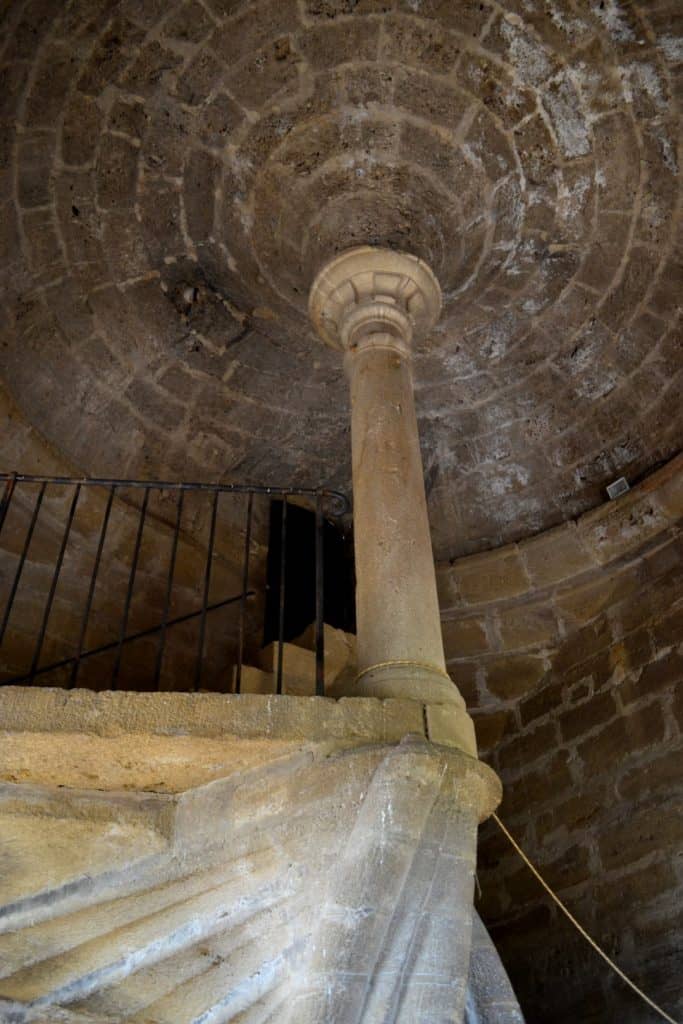
The spiral staircase, in case you are wondering, back in the days always twisted clockwise. This was because attackers holding their swords in their right hands would be hampered by the central spiral column of the staircase as they climbed up. Left handed attackers I suppose had the advantage here…
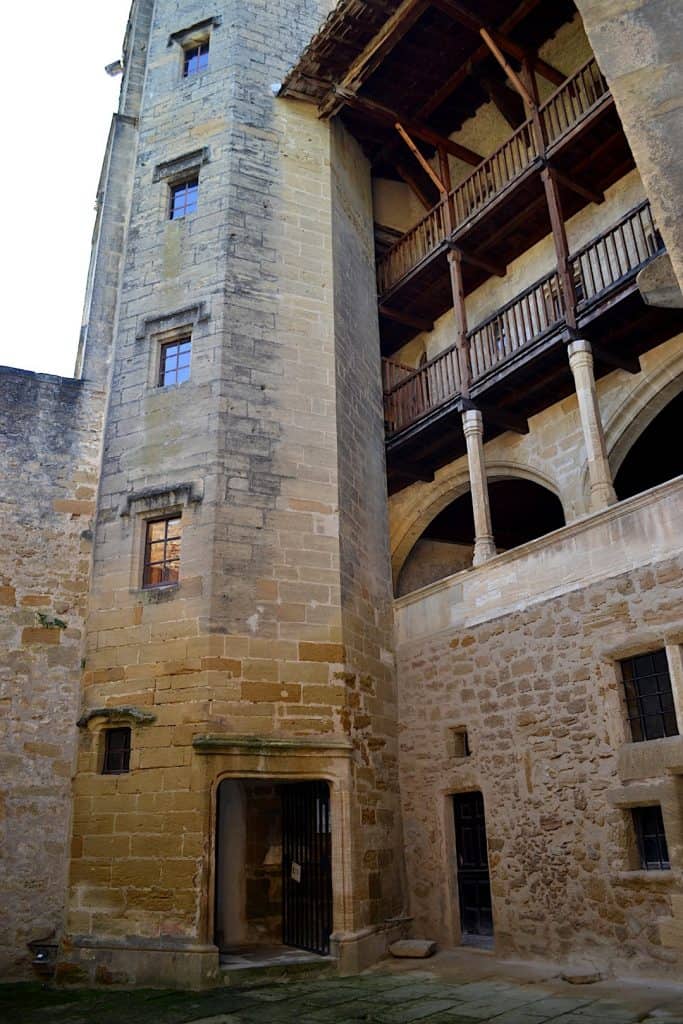
The Loggia 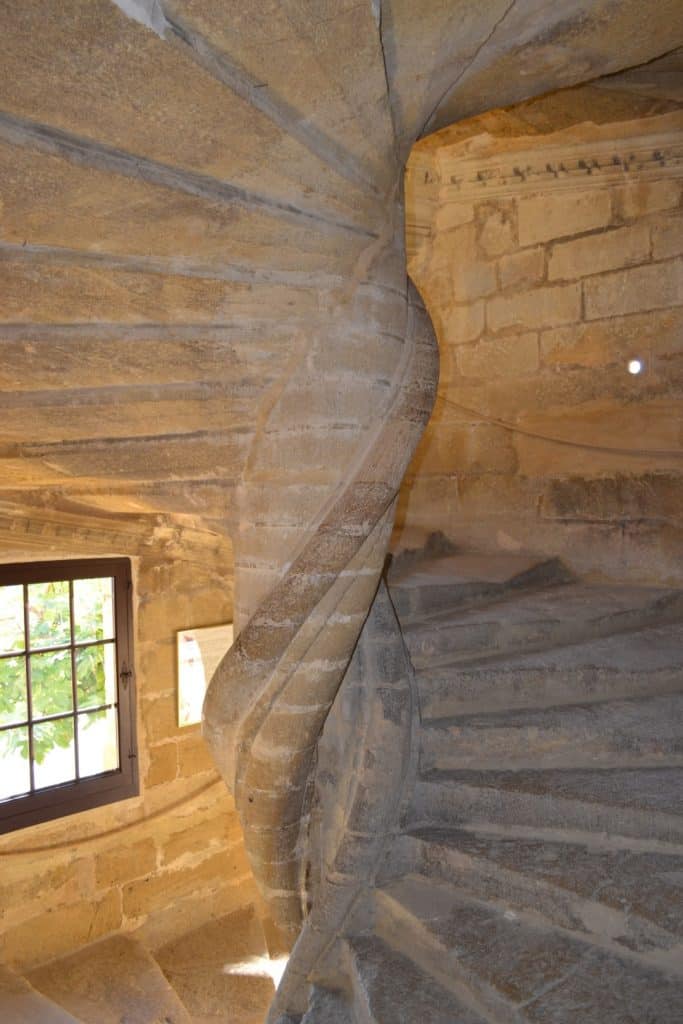
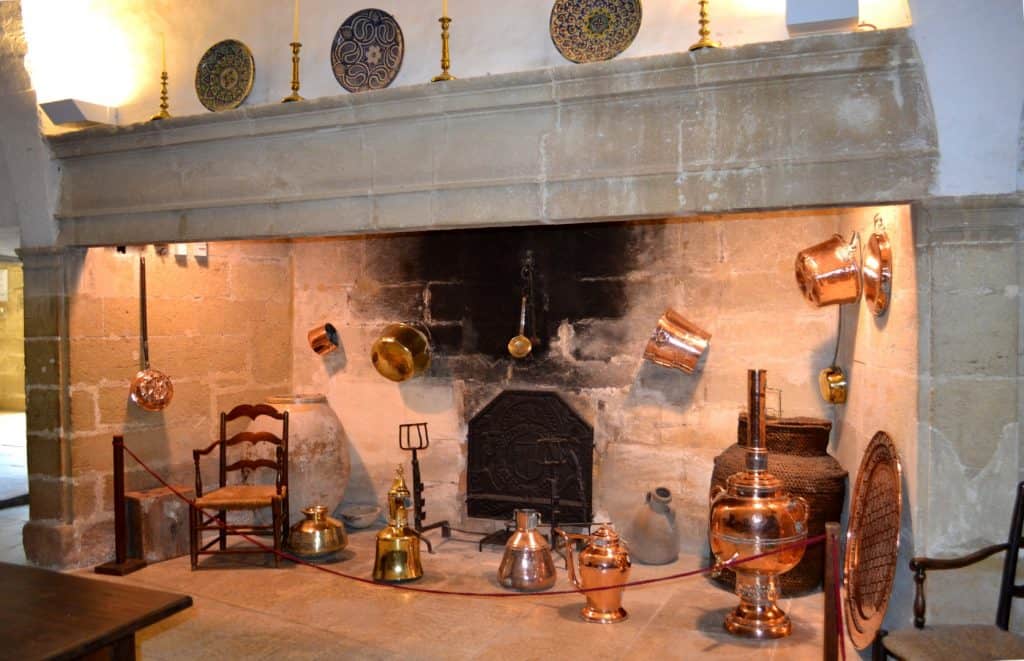
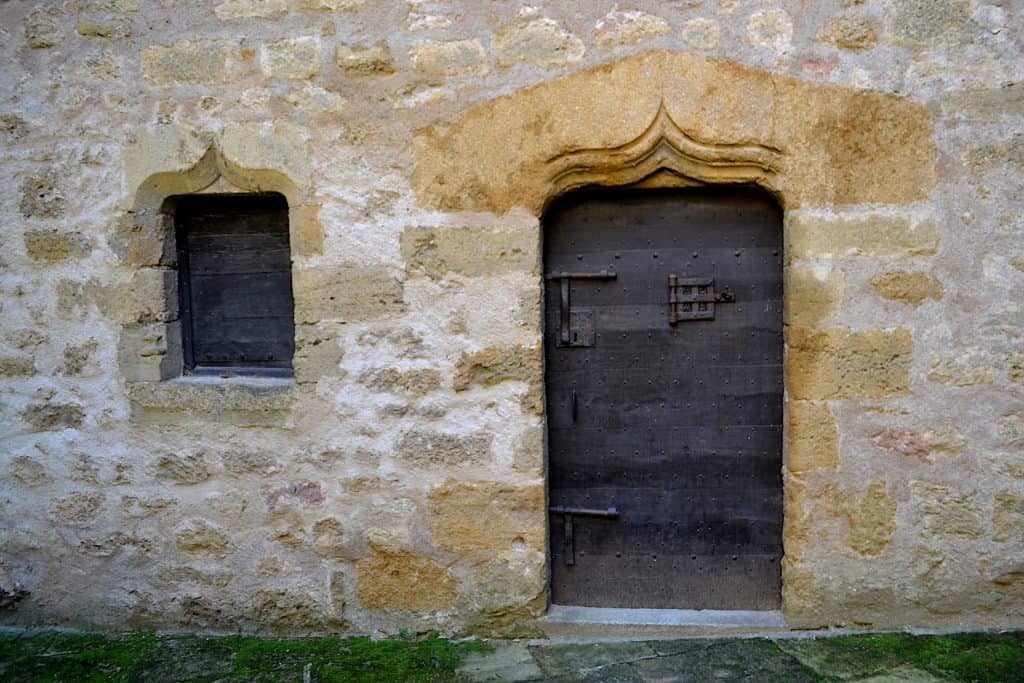
A very cute prison
The Renaissance Part
One of the most impressive features of this part of the chateau is the double spiral staircase incorporating 93 steps. It is very unique for this region. Each step consists of a slab of stone that incorporates the double spiral column and fits into the outside wall. Dummy decorated corner pieces reduce the weight of each step. Decorating friezes adorn the cornice of the staircase consisting of many different motifs. At the top, a slender column links between the staircase and the cupola.
On each floor as you ascend the magnificent staircase, you will find the Concert Room, Ladies’ Bedchamber, Reception Room, Salon, Music Room, Gentlemen’s Bedchamber. I love this term ‘bedchamber’ and not ‘bedroom’. I reckon I shall call my bedroom from now on, a bedchamber, sounds more secretive and intimate. Needless to say that each of these rooms is splendidly decorated in the 18th century Provencal style holding many treasures to discover at your leisure.
Some, like the reception room for entertaining guests exhibit woodwork and furniture from the 15th and 16th century. Just think about this for a second. Wooden furniture that is over 400 years old! I have some chairs from my grandmother from the 1970’s and I think I am holding retro treasures. Enormous fireplaces, featuring intricate decorations and fire-plaques from the 16th century greet and astound us. One could spend the entire day exploring all the special artifacts, each a small piece of history that remarkably survived.
So long!
Once again, I lost myself and I note the late hour, “But I have promises to keep / And miles to go before I sleep” (Robert Frost). I say goodbye to the gargoyles of the Lourmarin chateau menacing from above, goodbye to the pretty stone housed village nestled between vineyards and olive groves and get back into my car.
My next stop is a village on the other side of the Luberon mountain. I am in for a treat as I take the only winding road that crosses and cuts through this mountain. It is a glorious path and I am tempted at every turn to park my car and march deep into the woods, into the mountain. I understand now the strategic importance of Lourmarin guarding the entry and exit into and through the rocky mountain.
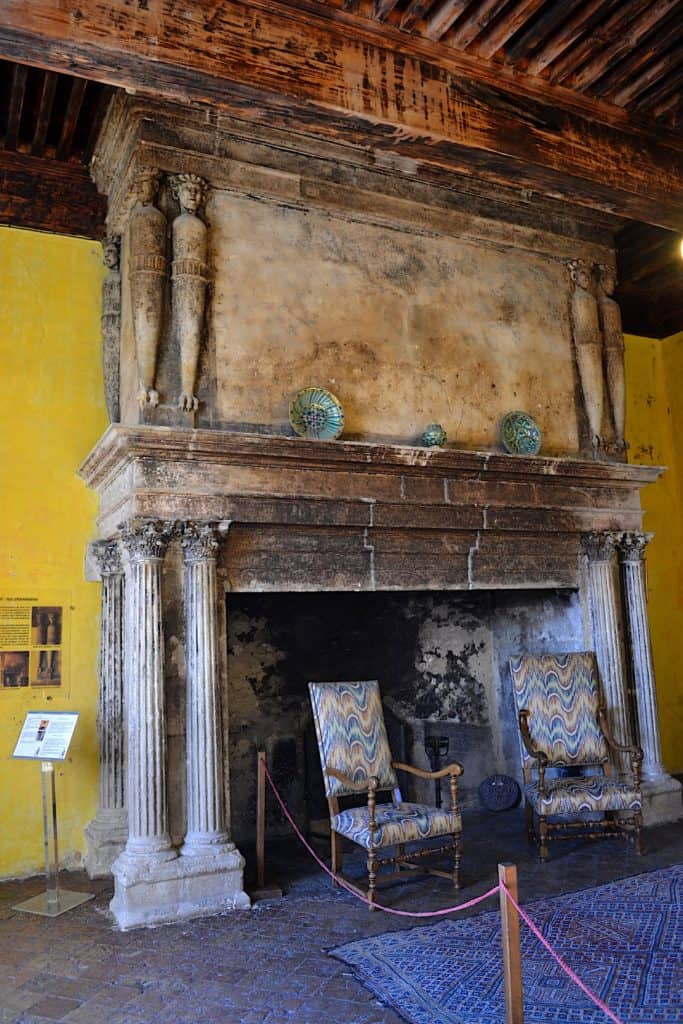
Fireplace with Inca statues 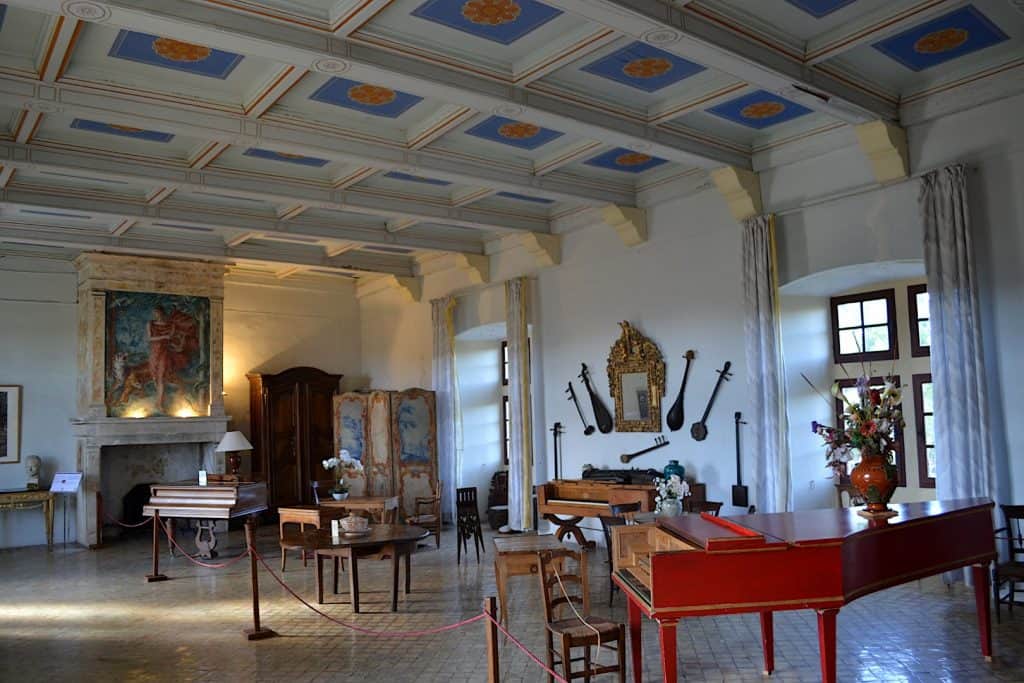
The music room 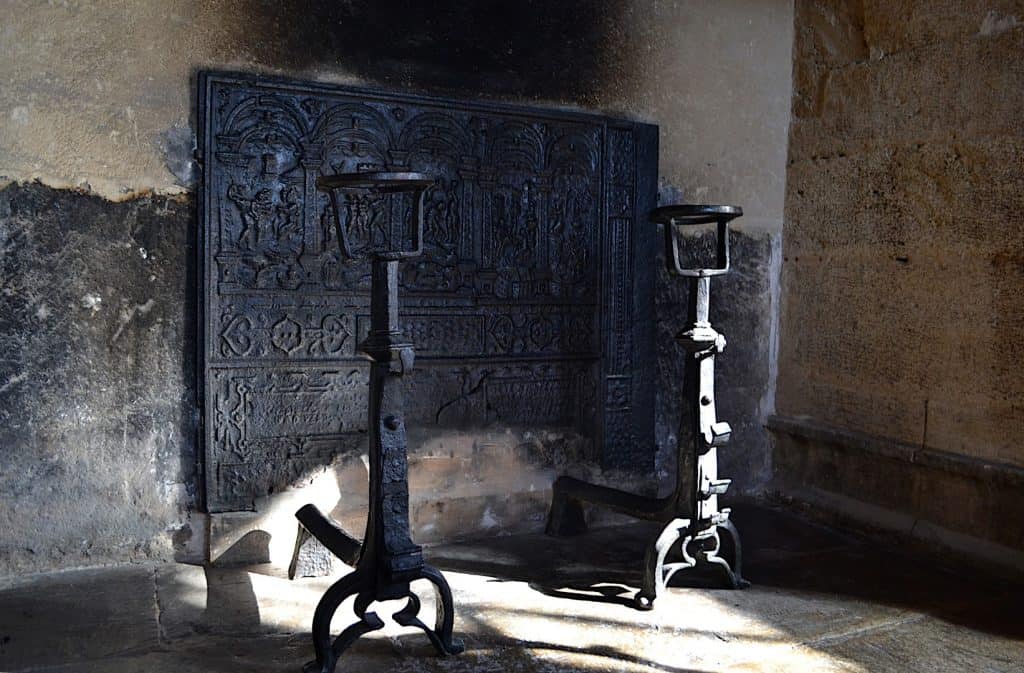
Fireplace tablet from the 16th century 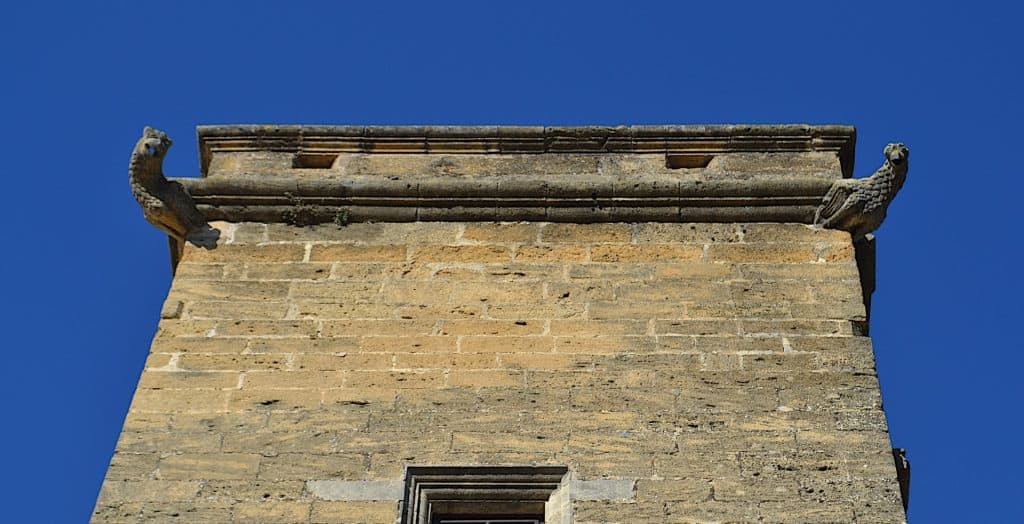
Rain gutters barking and menacing from above
Albert Camus, said it best, I believe (again):
“Lourmarin. The first evening after many so many years. The first star over the Luberon, the immense silence, the top of the cyprus tree that trembles in the breeze. In spite of its extraordinary beauty this is a solemn and austere country.”


