
Driving from Bonnieux to Menerbes I am treated to the quintessential Provencal experience. I am a star in my own road trip movie. I am treated to endless vineyards of the Luberon, cherry orchids, olive groves, with the iconic mas implanted sporadically. This beautiful symphony of the Luberon country side is augmented by sharp dramatic autumn lumiere in the late afternoon. It gives a stunning glow to the yellow and orange vineyards. I must stop my car to carefully register this image for posterity.
Arriving in Menerbes, it is chilly yet sunny, but I am surprised as to how deserted this famous village is on a Saturday. You’d expect lots of day trippers, French bo-bos strolling by. Where is everybody? From the top of the village on the ramparts, and the site of what remained of the citadel, I am afforded splendid views. It becomes clear as I look to the north: Mount Ventoux is wearing a fresh coat of snow.
Stay home
I understand now, this is enough to scare off any Sudiste or Provençaux. It is already too chilly for comfort, winter having set in early this year. Like a personal affront, a curse, the locals see it as pas normale and retreat to question their existence and on fait quoi ? Still sunny, thank god, because without sun a state of emergency would be declared. The early frost this year has unsettled many. The site of snow on Ventoux this early in the fall, I gather has sent many back home to commiserate and ponder the harshness of the winter to come. I speak about them, but I am just the same. Comparing past winters, calculating the costs of heating, and, at the end, it is just completely foreign here to wake up to freezing temperature. We just don’t know what to do.
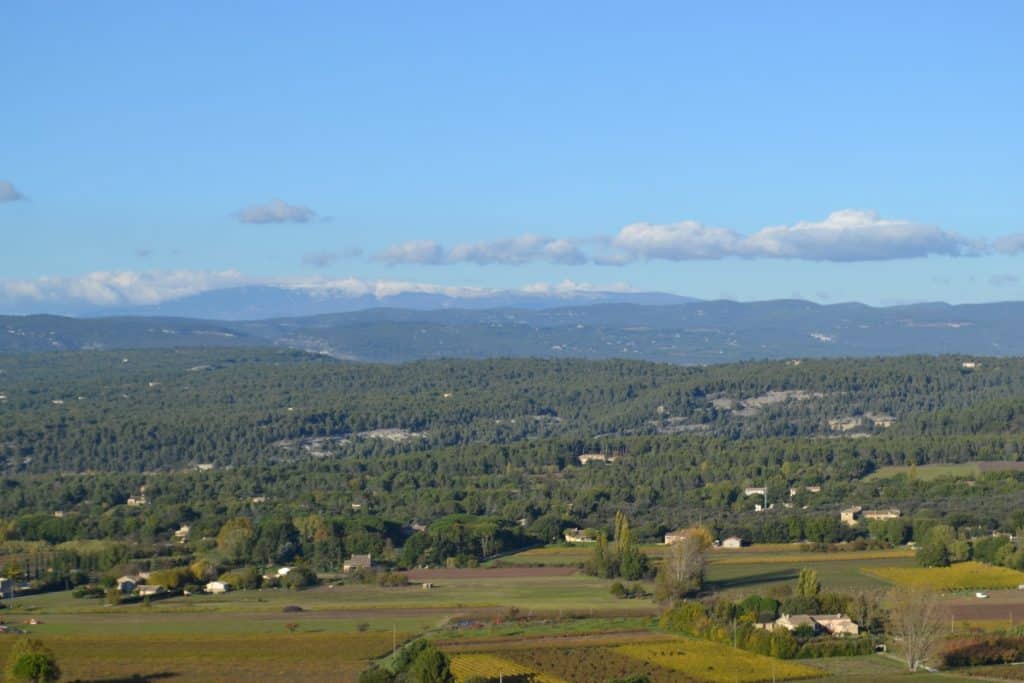
Snowy Ventoux, bit early 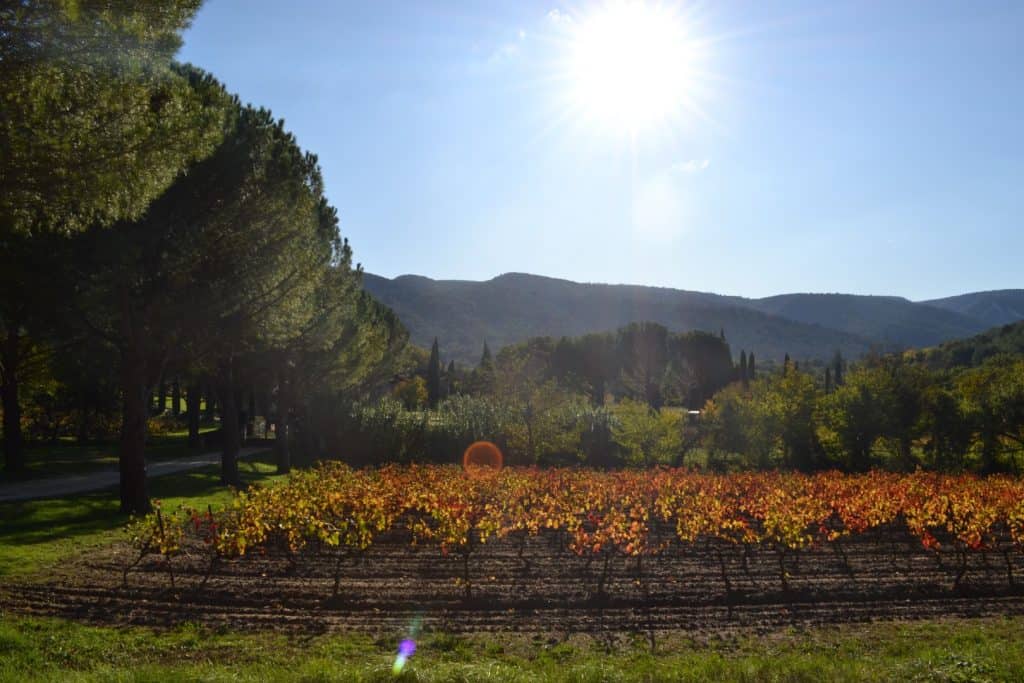
Orange vineyards twinkle in the sun
900 Cannonballs
The city of Ménerbes and its citadel were the site of a major battle between Huguenots and Catholics, called the Siege de Ménerbes, which lasted from 1573 to 1578 during the French Wars of Religion. Following early battles across France, Protestants decided to intentionally antagonize Pope Pius V by establishing a stronghold in Ménerbes. Despite the balance of power being strongly in favor of the Catholics, the fighting dragged on, increasing in force as time passed. Surrounded by trenches with opposing soldiers, the citadel suffered more than 900 blows by cannonballs, assaults by 14 tons of lead bullets, and barrages by incendiary weapons leading to destruction of its towers.
The Protestants finally agreed to negotiations, surrendering on 9 December 1578 to a “glorious capitulation.” The battle, which lasted five years, drained the coffers of the towns in the Comtat Venaissin and placed a heavy financial burden on papal accounts
Ménerbes is today labeled one of the “Most Beautiful Villages of France”. The pretty village calades, its beautiful houses and mansions from the sixteenth to the eighteenth century, have always attracted many famous artists: Nicolas de Stael, Picasso and Dora Maar.
Interesting here, even very
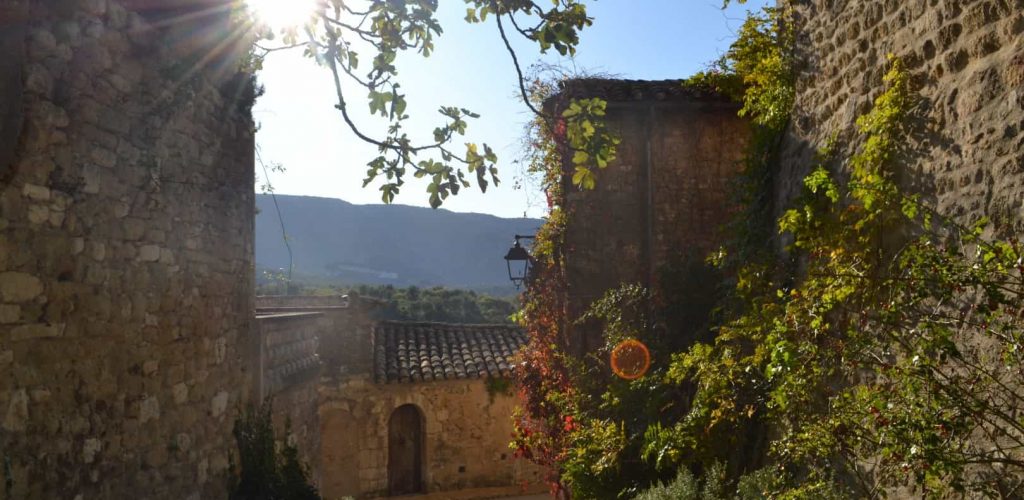
The most interesting sites to visit are at the top of the village. Churches, a clock tower, vestiges of the citadel now transformed into extraordinary private property. But my favorite site, I discover quite by accident. As I continue on the main road it turns and now I am facing the north and Mt. Ventoux, continuing further on, the road (of sorts!) begins to drop and an old passageway lined with old stones takes me to the ancient gate of the citadel.
This powerful gate was part of the ramparts that protected Menerbes and was one of two entrances to the village in the Middle Ages. This defensive work bears the old name of the church (from the time it was a priory in the thirteenth century).
The Porte Saint-Sauveur is an achievement of the sixteenth century, as specified by the defense elements and the treatment of masonry. During the Wars of Religion, it was through this opening that the Protestants entered to take the village and occupy it for five years. Wow, how cool I think, as I walk through the gate.
In the past, the village had two entrances. The second, named Notre-Dame or “porte du Midi”, was demolished in the 19th century. The two doors are represented by two keys in the coat of arms of Ménerbes.
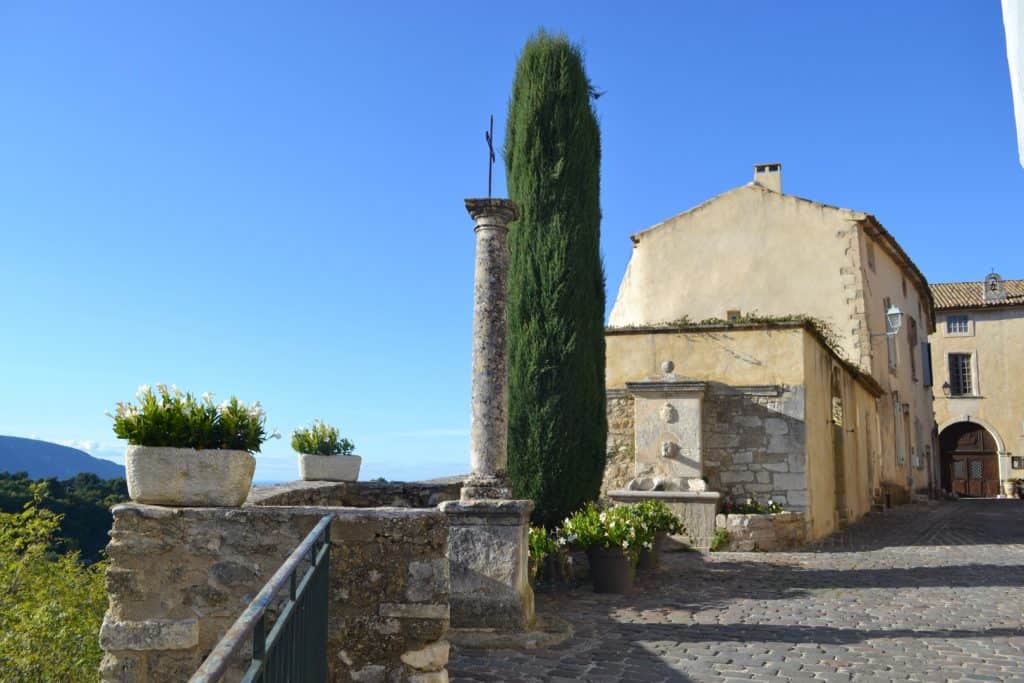
Lonely cedar tree stands witness 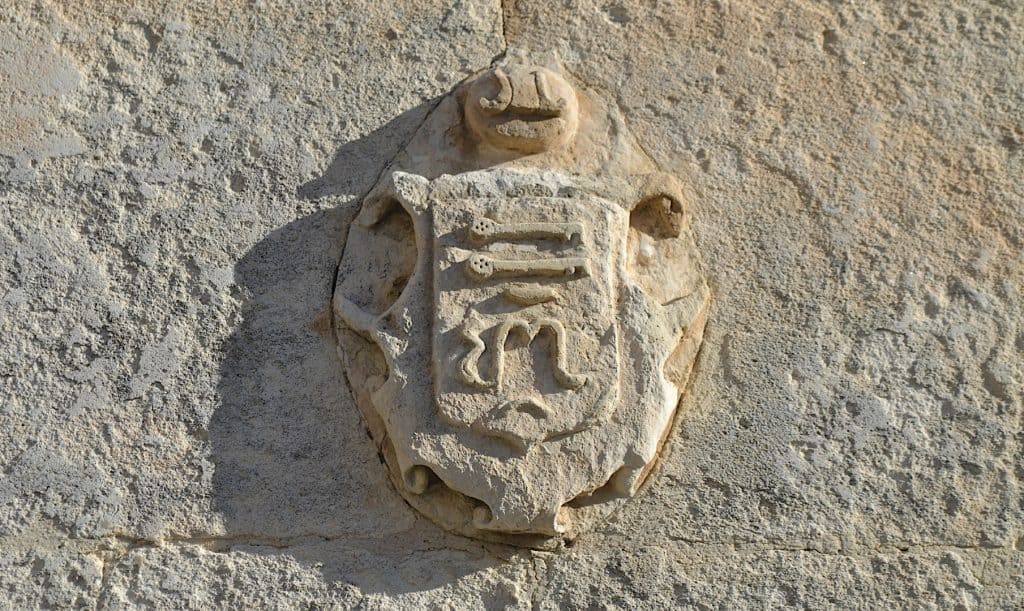
Coat of Arms 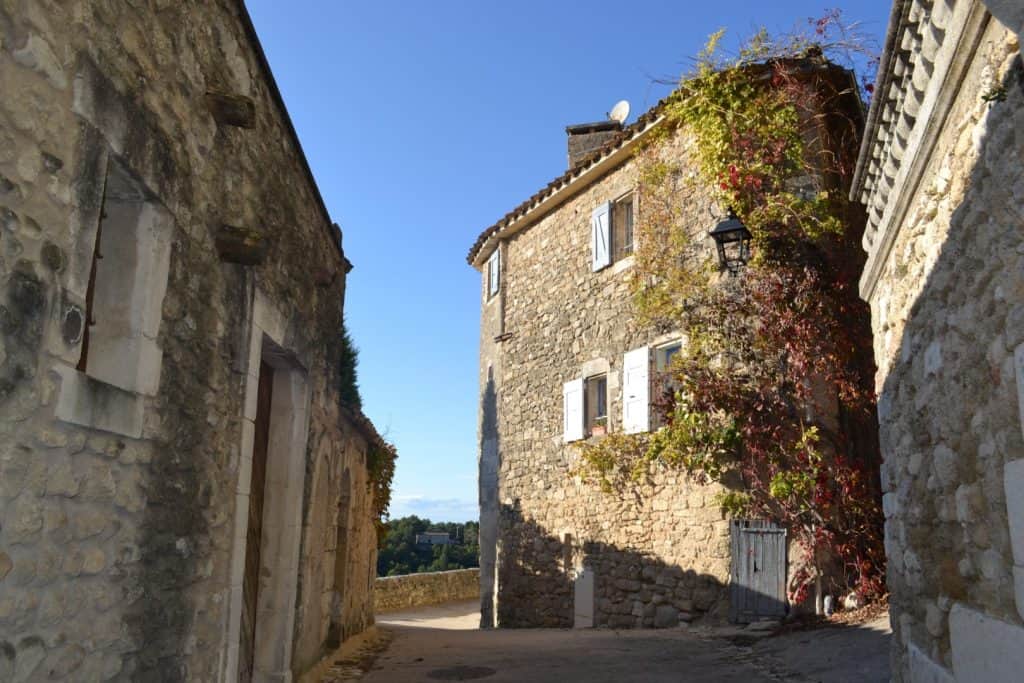
Exposed stone house 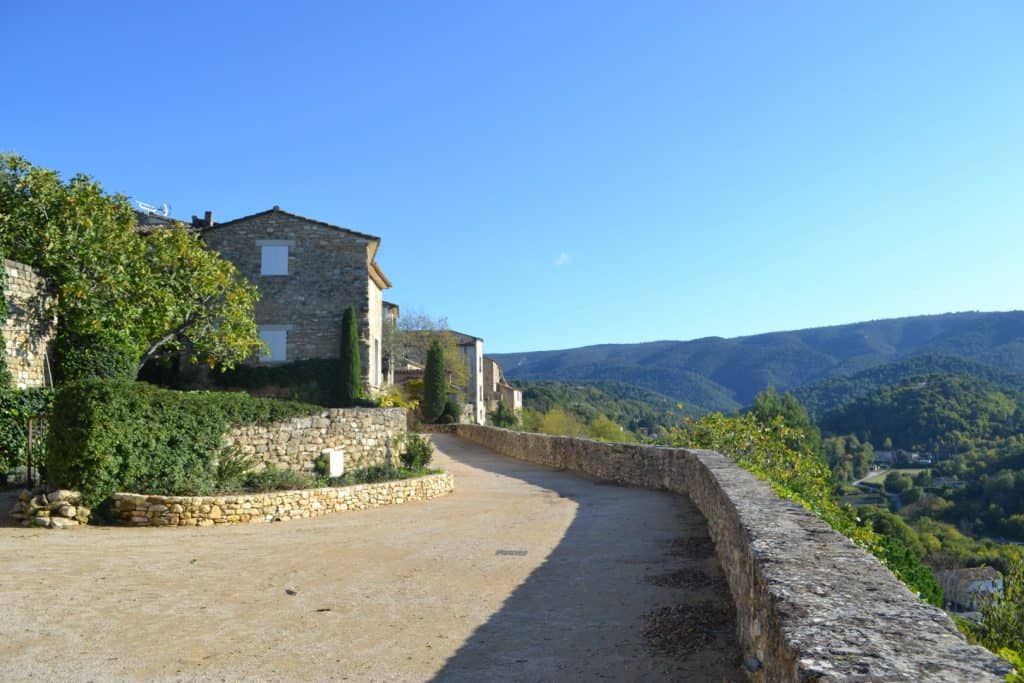
Deserted Menerbes in the chilly autumn
Of cakes and politeness
But alas, my stomach is gurgling and I saw a pleasant cafe back on the top. The only one open, I enter and order a ‘cafe’ and a slice of the apricot tart. It must be the best apricot tart I have eaten in my life. The server is an artist and her paintings adorn the walls. I am thinking she is also the baker, but it turns out the brains behind the operation is a man friend of hers that she is ‘just helping’. Not sure what is the actual arrangement here.
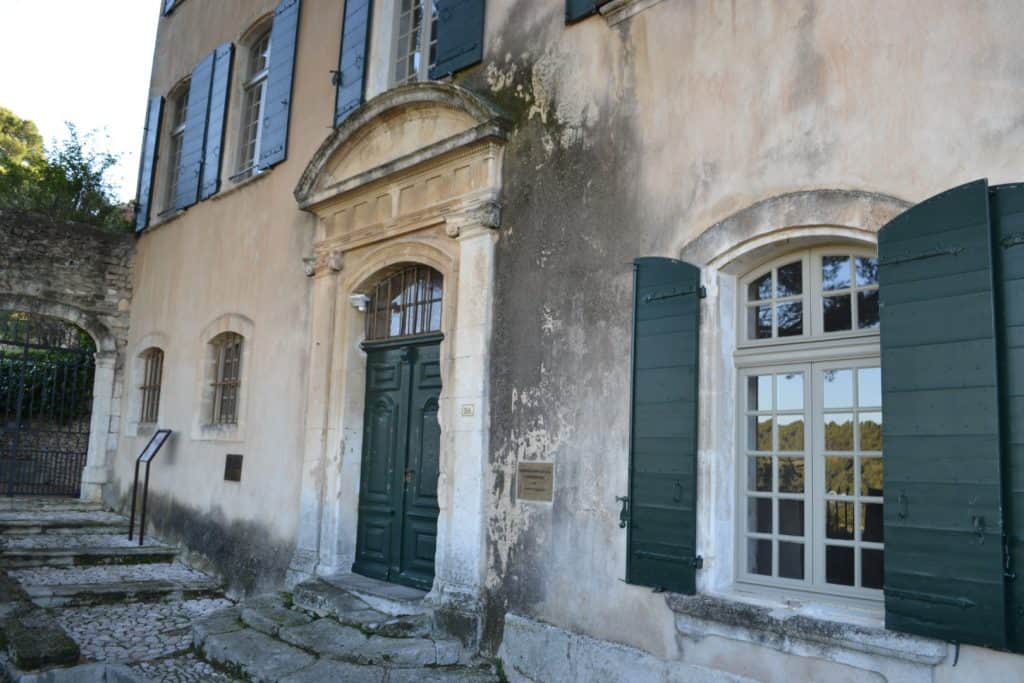
We talk about the weather and she explains that in the summer she must employ two other servers to handle the deluge of tourists. I take it she is relieved to enter the low season. She is curious about what I am doing here, and implores me to explore the cemetery and Dora Maar’s house next door. She does not try to sell me her paintings but instead recommends I read this book or explore this and that artist from Menerbes.
Artists’ residence. Me too! 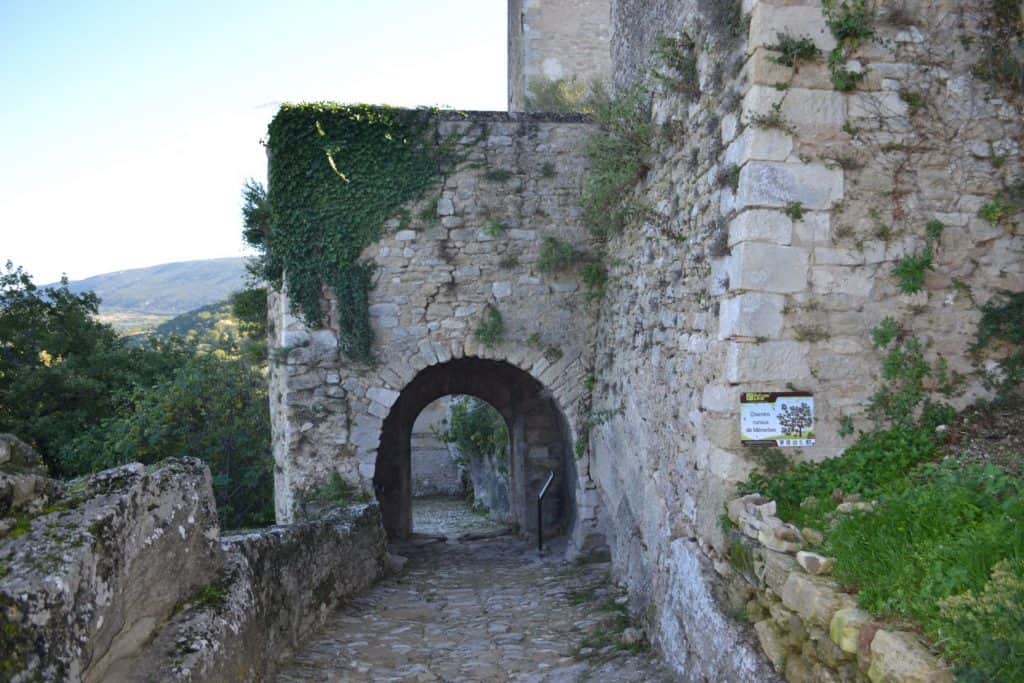
Gate of victory (or defeat…)
An American tourist or artist, pays her bill. She chuckles at the thought that she owes 24 Euros. Considering that each slice of tart is 5 euros, I calculate how many did she eat? She feels embarrassed and justifies this as ‘her big splurge of the day’. She quickly changes the subject to art, and artists’ residence in Menerbes.
Death by pleasantries
Another couple sitting, or freezing outside, comes inside also to pay their modest bill. They are French but not from the area I immediately sense. Locals would not sit outside in this chill. They decide to buy some navettes (local cookies from Marseille in the shape of a boat). I think maybe I should too. They pay and talk, and chat, and engage in the usual long drawn out pleasant leave-takings and polite “merci a vous” a dozen times, causing them to forget their precious bag of navettes for the road. The vendor runs after them, to which they humbly apologize again a dozen times, and re-engage in polite partings as is the custom.
How tiring I think. I pay for my tart and coffee and leave the poor vendor in peace and quiet. I quickly run back to my car to warm up with my newfound sugar and caffeine rush, compliments of Menerbes.


