
As a traveler, there are some places you visit and say “It was lovely” or “very interesting”. Some you might adorn with superlatives like “amazing” and “stunning”. You might implore others to visit them as “a-must-see”. There are even some trips I can safely say have changed me forever.
But there are some places which stand by a category all on their own. You are not sure what to say, you can’t find the words. It’s the feeling – a mix of enchantment with eeriness, bordering on uneasiness. It leaves you with a sentiment that you are walking in the very heavy footprints of history, too heavy.
We stop being tourists. We begin to ask questions.
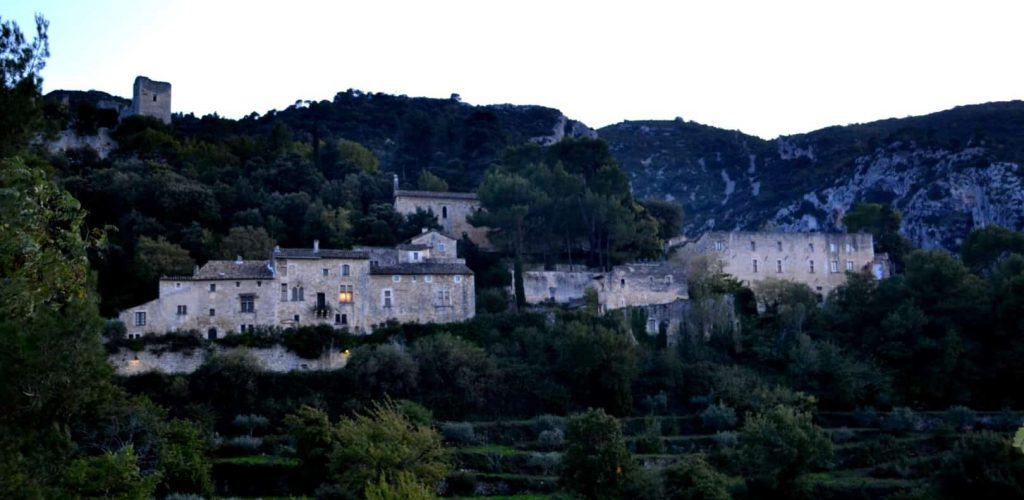
Oppede-le-Vieux: Ghosts whisper in the woods as you climb up ancient craggy calades. All around you are ruins of a medieval village where nature has taken over. Thick brush and ivy has swallowed it back up.
What has happened here? Why was there a mass exodus from this prosperous farming village to the lower sunny valley? What were they running away from?!
Eternal shadow cast over the village
Clinging to the northern slope of the Luberon, Oppede-le-Vieux occupies an exceptional site. Built on a rocky outcrop with three sides hanging over a steep cliff side, Oppède le Vieux keeps its secret well hidden in the forest. Among the remains of the fortifications, abandoned temples and collapsed houses, you will eventually find, high above all a Romanesque church, strangely, the only vestige perfectly preserved. Next to it, a tower and a crumbling wall make up the ruins of the medieval castle that belonged to the Counts of Toulouse, and then, the papacy in the 13th century. These ruins have not moved since 1731 when an earthquake ravaged the village destroying the castle.
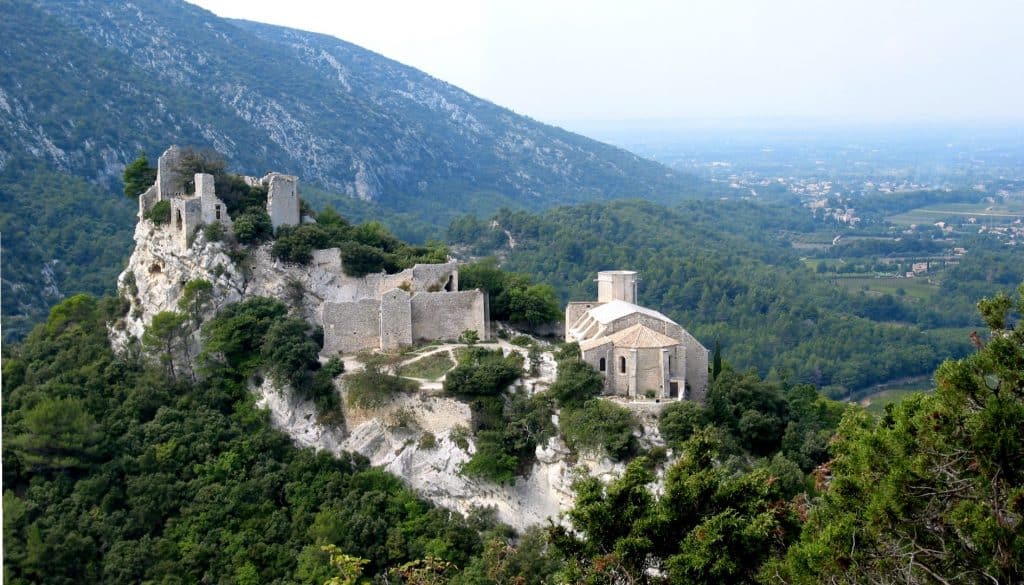
The preserved church and crumbling chateau 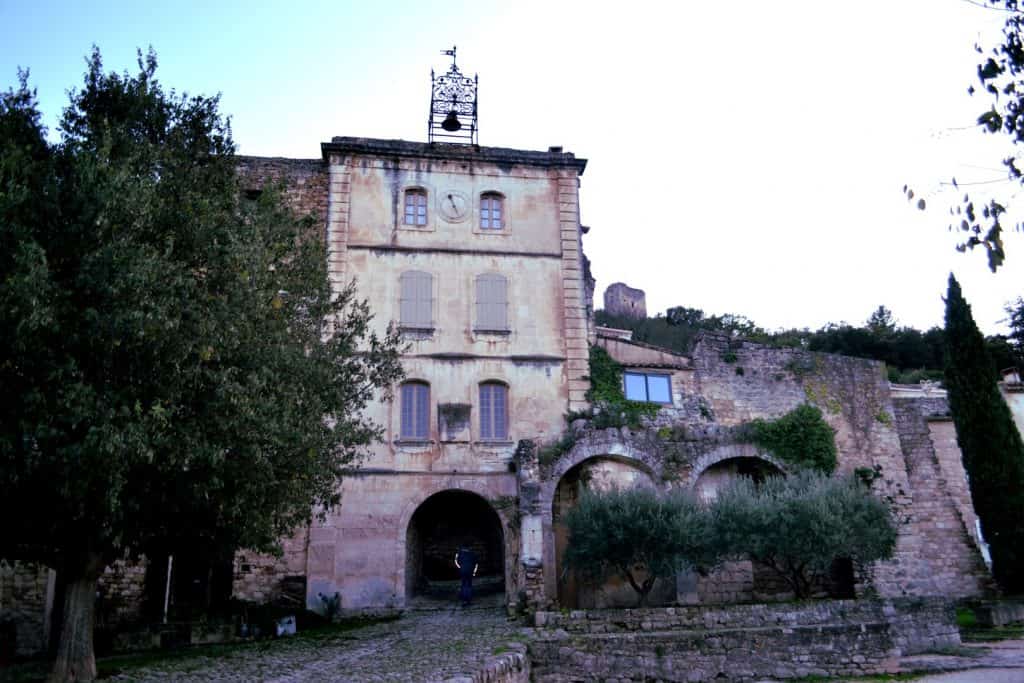
The bell tower in the heart of the village
During the Great Schism, the castle of Oppède sheltered the antipope Benedict XIII. Once again needing to flee, he “flew off” from the very top by way of an arched postern opening diving into the empty space below, borne, it is said, by the devil himself.
Later, the evil Jean Maynier, Baron of Oppède, made the castle his seat from which he waged a ruthless war against the Vaudois, slaughtering 11 villages and massacring 3000 people. He is eventually beheaded for his crimes.
If it sounds dramatic and disturbing, one can understand that dry facts do not give the entire picture. And if I was a villager there myself, I would probably look to sunnier pastures considering all the negative energies abound. One might blame it on the near constant shadow and dampness cast on the village by the Luberon. A feeling of melancholy grips me, for the village is beautiful and dramatically set. The buildings are not to blame, but those who ruled them.
Nevertheless, Oppede was punished and deserted.
Only love can prevail
As I climb up and down the stony calades, an amorous young couple crosses my path several times. It seems like a perfect place to be lost in love. She poses for photos in every old weird corner, he happily obliges, yet refuses to be photographed himself. They are cute and oblivious, unaware of village’s heavy history. They giggle and laugh down the calades laid with slabs of stone. Their laughter echos out of place like in a dream and soon they disappear like phantoms themselves.
I disappear too as I find an old exit from the village walls in the form of a ramp with stony pink stairs. Seduced by them, I take them all the way down outside the village walls. Now I’m surrounded by dark woods and confronted by a dug out depression holding a cave which has since been gated up. Was this an old prison? Place to house livestock? There are many mysteries surrounding this village and this article is not the place to discuss all the strange engravings scattered about.
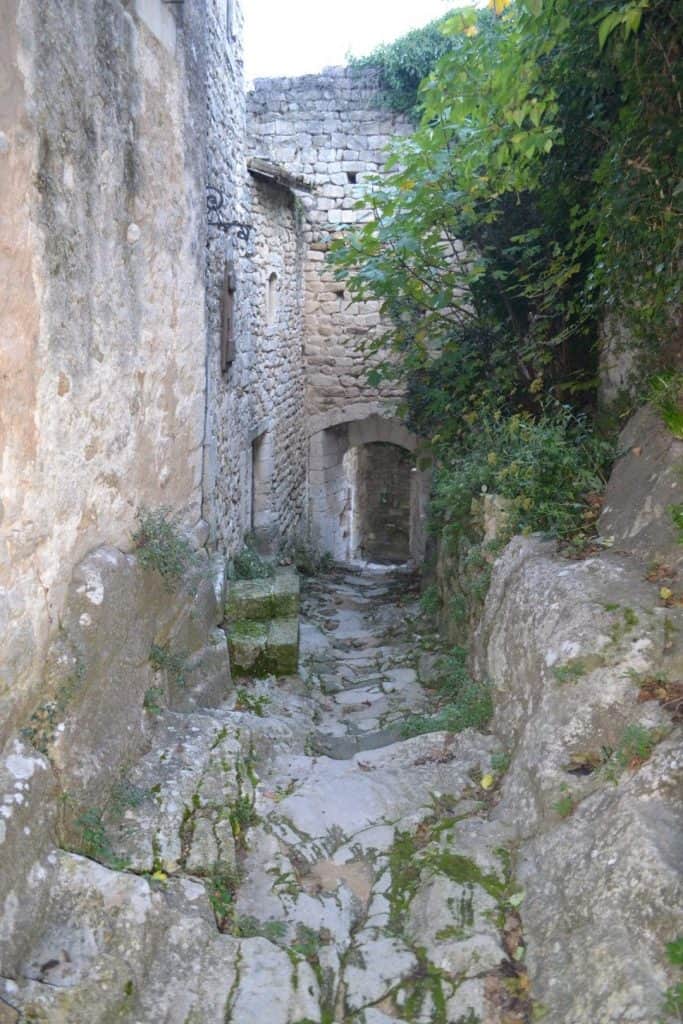
A tempting descent 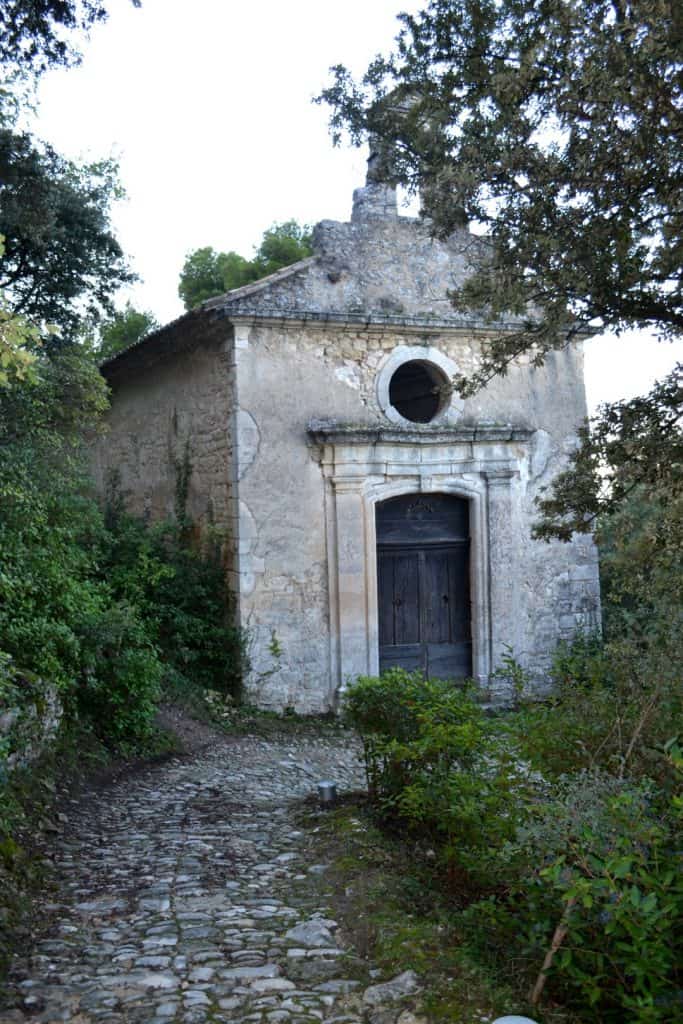
An abandoned temple in the forest 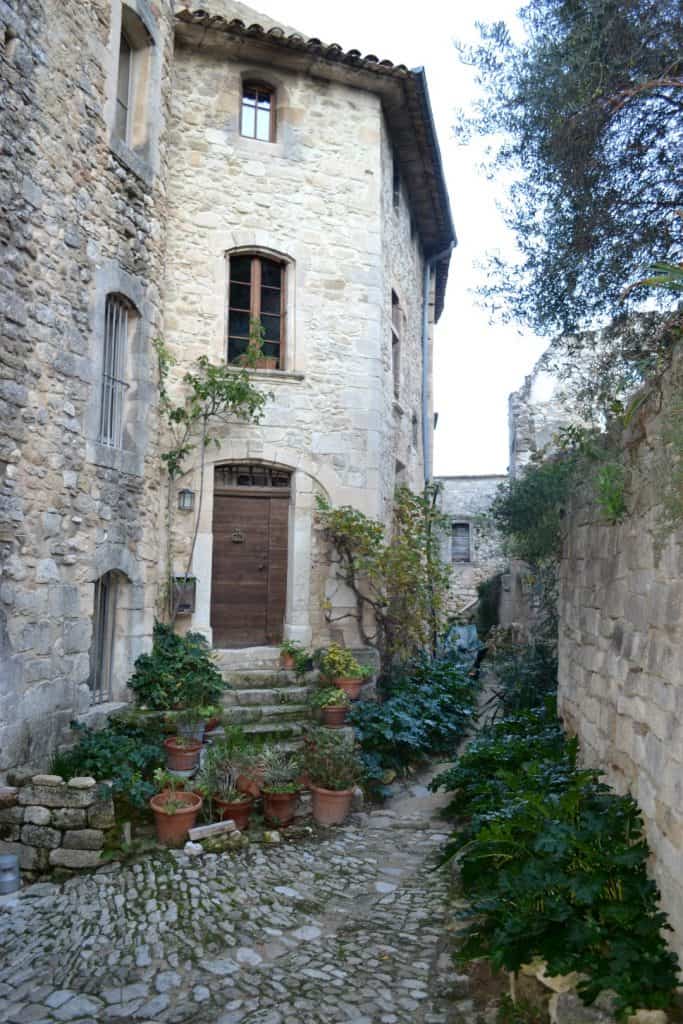
Artists under the Third Reich
If this wasn’t enough, during the WWII, a community of artists was founded here, attracting notably the sculptor François Stahly and the artist and writer Consuelo de Saint Exupéry (wife of the author of The Little Prince). The artists seeking refuge from Nazi occupied France, threw themselves into the task of restoring glory to old Oppede. But in 1942, when the Germans occupied all of France, Nazi patrols did not wait long to arrive even to this ruined corner of Provence.
Since then, other artists have picked up the torch in the village. The old houses have been restored, breathing new life into those walls that date from the 15th and 16th centuries. With its vaulted ceiling, frescoes and paintings the splendid Notre-Dame d’Alidon church, built in either the 10th or 11th century, seems to resound in thanks to the benefactors during the summer concerts.
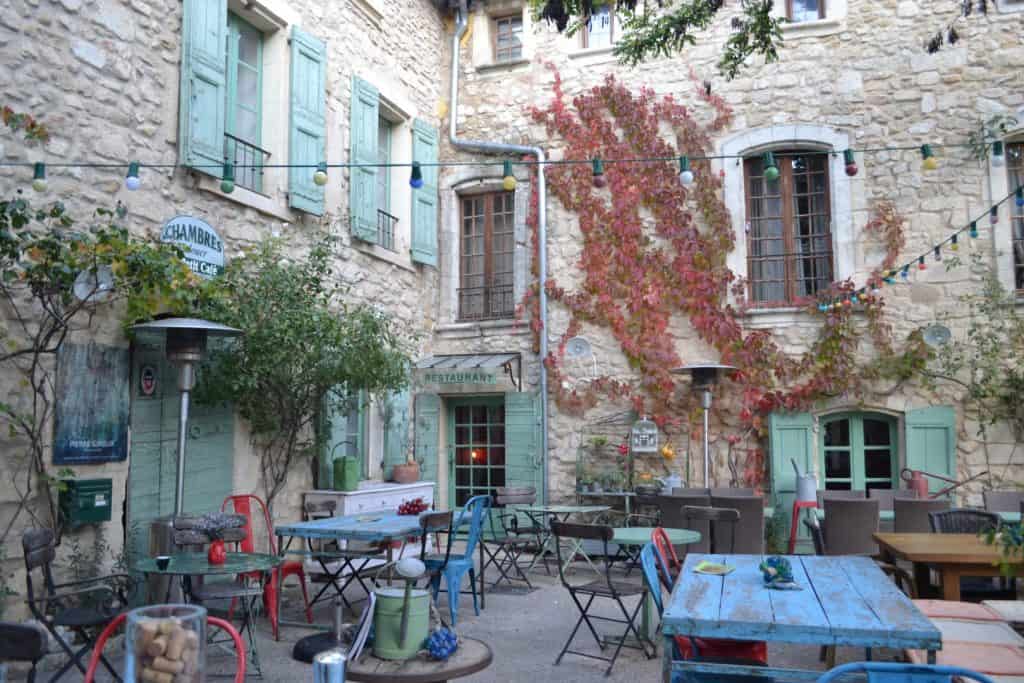
A lovely café 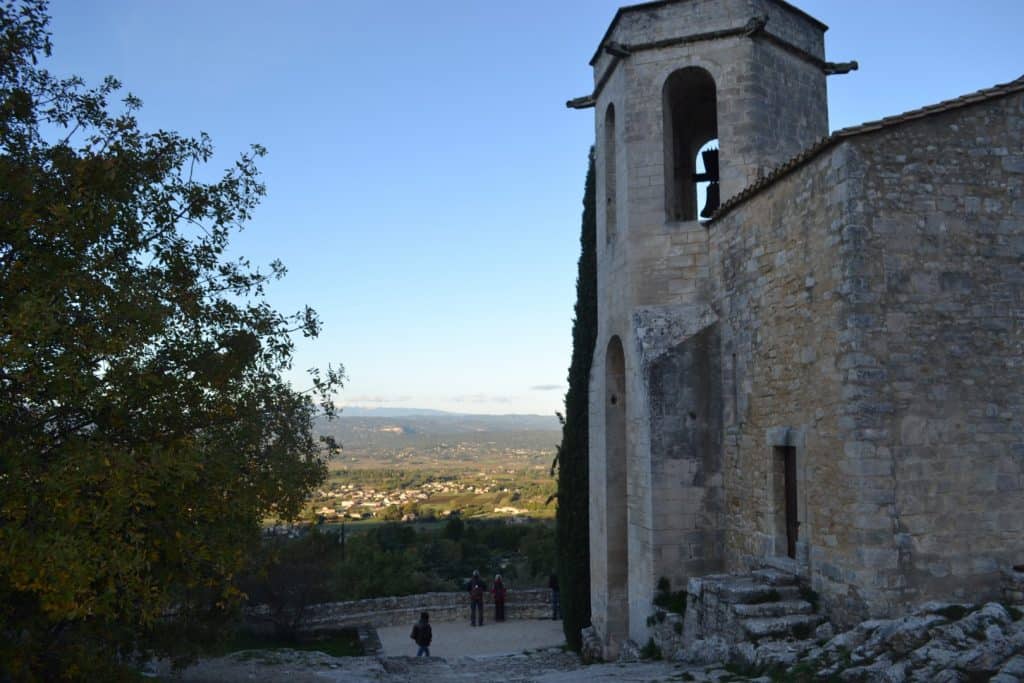
Oppede always in the shadow 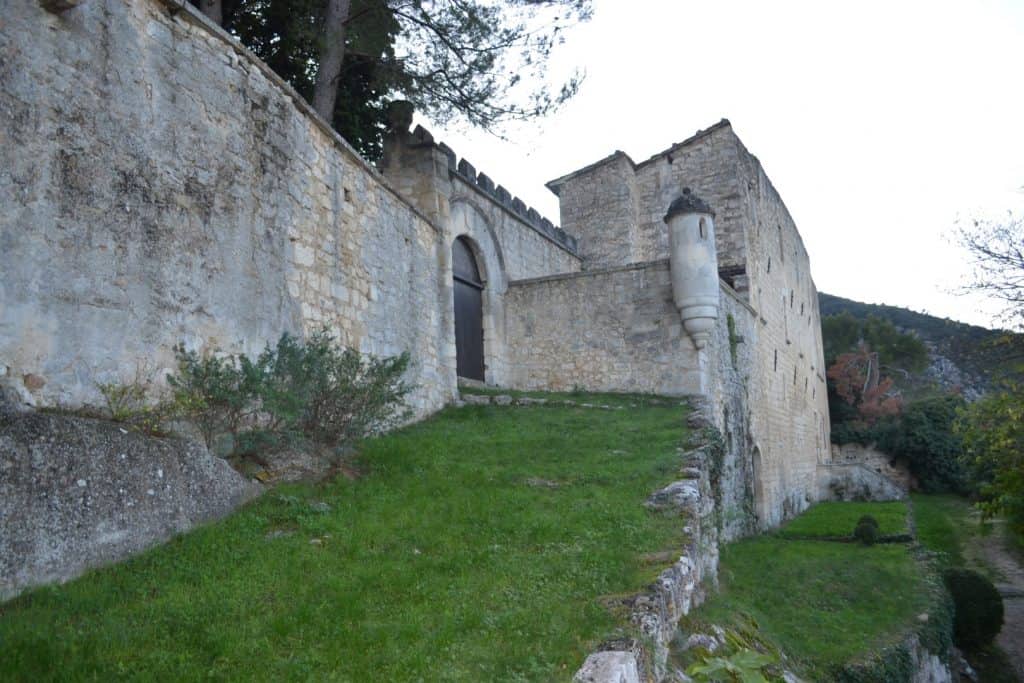
There’s always a defensive wall
I will close off by saying that when and if you visit Oppede-le-vieux do so early in the morning or late in the afternoon so you can find some solitude to discern the whispers in the tree leaves by yourself as you climb the ancient cobblestones.
If you’d like to sequester with me in this village and others join my guided tour to the South Luberon.


